Pastels
Why pastel colors shift in almond bark, and how to keep them true
Vanilla almond bark is cream, not white, so baby blue leans teal and blush leans peach. How to pick the coating and the dose for clean pastel candy coating.
By the Coco Match team. Updated .
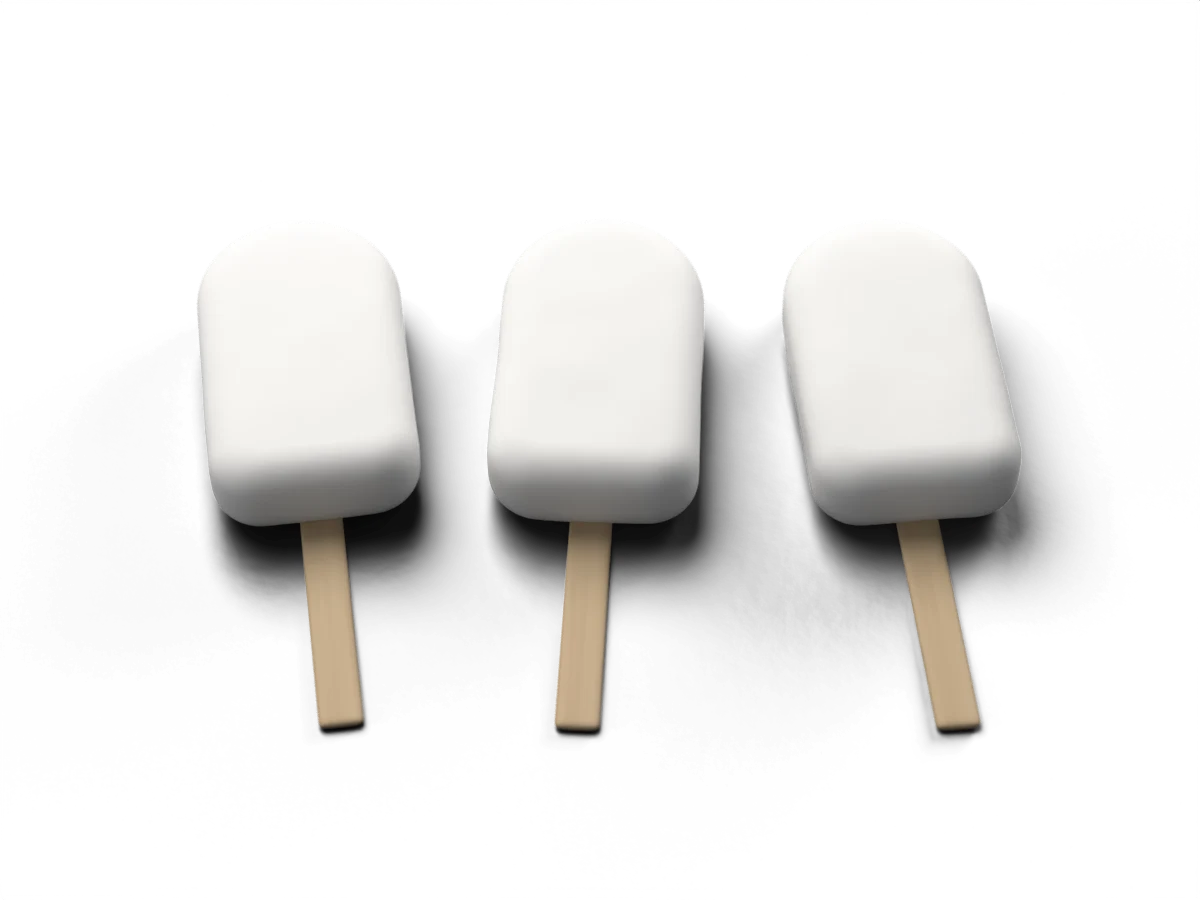
Almond bark is not white
Put a piece of vanilla almond bark on a sheet of printer paper and the difference is plain: the bark is cream. That cream is the color you start from, and a pastel is mostly the coating with a trace of dye, so the coating’s own color counts for more in a pastel than in any other shade.
Where pale colors start
- Vanilla almond bark
- Almond bark with white candy color
- Bright white candy melts
What cream does to blue, pink and purple
Cream is a pale yellow. Add it to blue and the blue leans green. Add it to pink and the pink leans peach. Add it to purple, which is yellow’s opposite, and the two cancel toward gray. The paler the color, the stronger the effect.
Cobalt in vanilla almond bark
- No dye
- ¼ drop
- ½ drop
- 1 drop
- 2 drops
Cobalt in bright white candy melts
- No dye
- ¼ drop
- ½ drop
- 1 drop
- 2 drops
Hot Pink in vanilla almond bark
- No dye
- ¼ drop
- ½ drop
- 1 drop
- 2 drops
Hot Pink in bright white candy melts
- No dye
- ¼ drop
- ½ drop
- 1 drop
- 2 drops
Purple in vanilla almond bark
- No dye
- ¼ drop
- ½ drop
- 1 drop
- 2 drops
Purple in bright white candy melts
- No dye
- ¼ drop
- ½ drop
- 1 drop
- 2 drops
Three ways to keep a pastel true
Start from bright white candy melts
This is the simplest fix, and for icy blues and lilacs it is the only one that fully works. White melts and almond bark set a little differently, so test dip before you swap coatings on a big order.
Whiten the almond bark first
Oil-based white candy color covers some of the cream. It also softens every color you add after it, so stir the white in first and then color. This is a good choice when you prefer how your almond bark dips and tastes.
Lean into warm pastels
Cream is kind to warm colors. Butter yellow, peach, blush, sage and mint all sit comfortably on almond bark, because a little yellow belongs in them. If the palette is yours to choose, these are the pastels almond bark does best.
How much the coating matters, in numbers
Here are three popular pastels solved by Coco Match’s color model, first from almond bark and then from bright white candy melts. The score is how close the predicted color is to the target, out of 100.
Baby blue
- Target
- Almond bark, 81%
- White melts, 96%
Blush pink
- Target
- Almond bark, 94%
- White melts, 97%
Lilac
- Target
- Almond bark, 77%
- White melts, 87%
Blush pink scores 94 from almond bark and 97 from white melts, so use whichever you have. Baby blue goes from 81 to96, and lilac from 77 to 87. Lilac is still the hardest of the three: a clean pale purple usually wants a violet or lilac dye of its own rather than a mix.
Dosing a pastel
- Scale the bowl, not the drop. Half a drop per ounce is one drop in 2 ounces, or six drops in a 12 ounce bag.
- For less than a drop, dip a toothpick into the color and swirl it through the coating.
- Or make a strong bowl: color a small amount properly, then stir a measured spoonful of it into plain coating.
- Add color once, stir for a full minute, and wait 10 minutes. Pastels are easy to overshoot and can’t be walked back without more coating.
Questions
Quick answers
Why does my baby blue almond bark look teal or green?
How do I make pastel candy melts?
How do I measure half a drop of candy color?
Does white candy color make almond bark whiter?
Keep reading
More guides
 Troubleshooting
Seized or thick coating
Water, heat and heavy color: how to tell which one thickened your bowl, and what can be saved.Read the guide Planning
How much coating per treat
Ounces per cake pop, pretzel rod, Oreo and strawberry, and the extra every dipping bowl needs.Read the guide Color matching